A candle is a small sun with a boundary. The art is not lighting it — anyone can do that — but letting it define one corner of a room instead of drowning in the middle of the ceiling’s work.
Why does my candle tunnel, and how do I stop it?
Tunneling is memory: wax only melts as far as it melted the first time. So the first burn decides everything — let the pool of wax reach the container’s edge before extinguishing, which takes one and a half to two hours for a standard candle. Do that once, and every later burn follows the full circle. Between burns, trim the wick to five millimeters; a long wick burns hot, fast, and crooked.
How long should one session last?
Two to three hours is the sweet spot; four is the ceiling. Past four hours the wick mushrooms and the scent turns from garden to canteen. If an evening runs long, extinguish at the fourth hour, let the wax reset for twenty minutes, and relight for a fresh second act.
Where does a candle belong in a room?
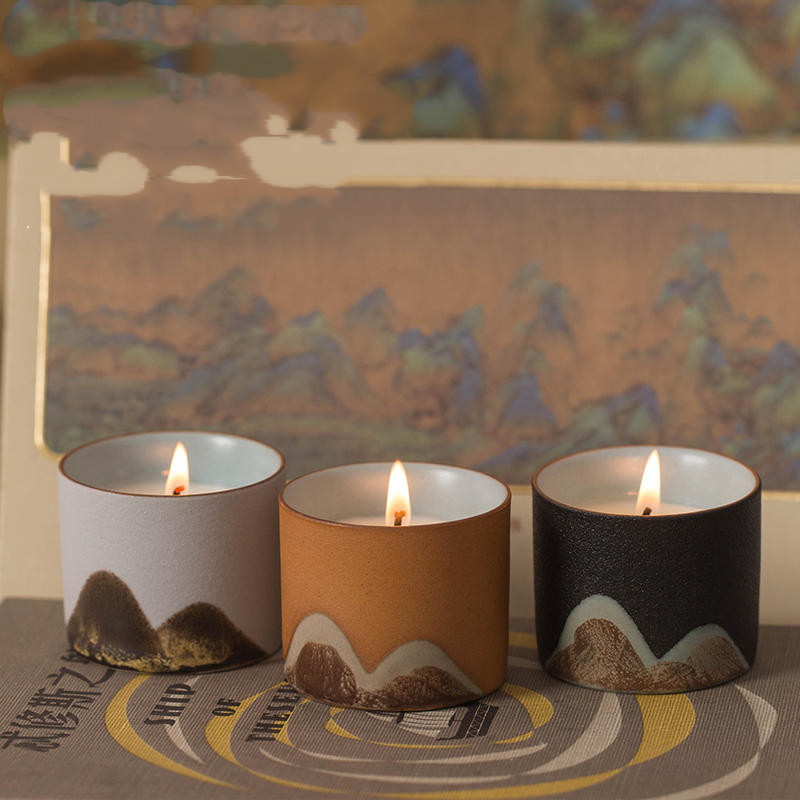
A corner, not the center — corners collect shadow, and a candle’s job is to interrupt shadow. Keep it away from doorways and vents; a flickering flame is fighting a draft, and drafts also drag the scent away before it settles. On a tea table’s edge, the tea cup candle ($31) doubles as scenery — a ceramic cup that keeps burning quietly after the tea is gone. For shelves and window ledges, the color pillar candle ($22) holds its shape and its smokeless burn. And any candle behaves better on a base: the glass cup holder ($20) catches both wax and worry.
FAQ
The flame is blackening the glass — why? The wick is too long or the air too still. Trim to five millimeters and move the candle half a meter; soot means the flame is starving or smothering.
How should I store candles? Cool, dark, flat, and covered. Sunlight bleaches color and softens wax; a drawer beats a windowsill every time.
One candle, one corner, one hour. Light is not about how much — it is about where it stops.