Tea for two is the hardest and finest number. One person drifts; a crowd performs. Two people at a properly set table have nowhere to hide and nothing to hurry — which is the whole point of pouring for someone.
What does a two-person tea table actually need?
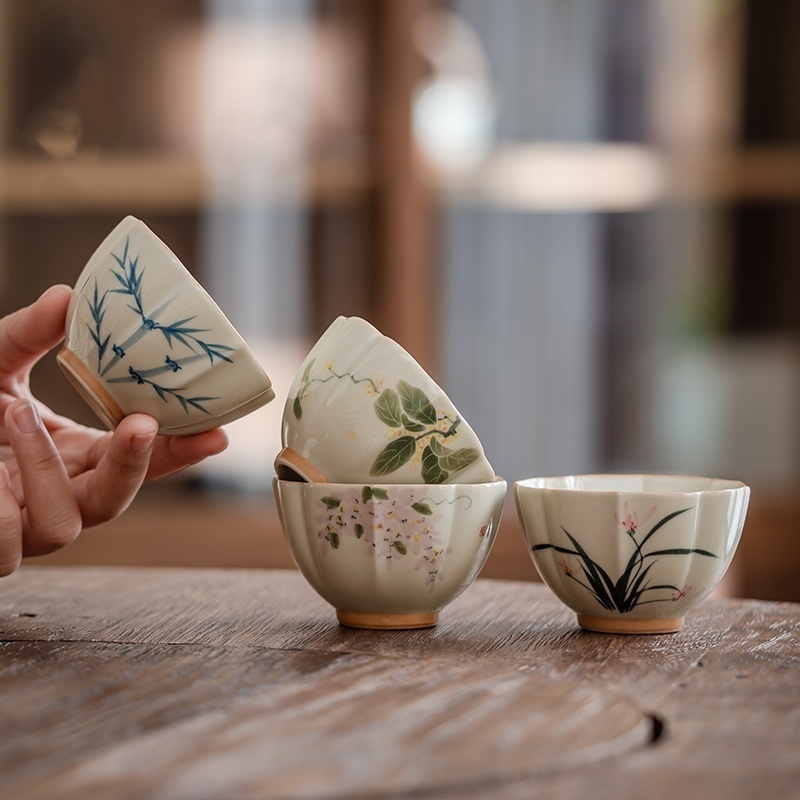
Five things: a pot or gaiwan, two cups, a fairness pitcher, a strainer, and a cloth for spills. Nothing else — a crowded table is the beginner’s signature. The begonia set ($77) packs all five into one hand-painted arrangement, so the only decision left is who sits where.
In what order do you set the table?
Four moves, done before the water boils. Guest cup first, placed at the guest’s right hand. Pitcher second, on the host’s left where the pouring arm begins. Strainer third, resting on the pitcher, closest to the person pouring. Cloth last, within reach of whoever will inevitably need it. The whole setting takes ninety seconds and makes the first pour look rehearsed.
How hot should the water be?
By the leaf: green tea at 80°C, oolong at 90–95°C, black at a full 95–100°C. And warm the cups before the first pour — hot water swirled twelve seconds in each cup, then discarded. Tea poured into a cold cup drops four degrees on contact, and four degrees is the difference between fragrance opening and staying shut.
What do you serve alongside?
Something dry, never sweet — sugar resets the tongue and erases the tea. A small plate of plain biscuits or nuts sits between the two of you, reachable without stretching. If the mood runs ceremonial, the Song dim sum set turns the serving itself into part of the ritual. Between steepings, run each pour through the ceramic tea filter; clarity in the cup is hospitality you can see.
FAQ
How many steeps for guests? Good oolong gives five to seven. Announce the last steep — “this one is the farewell pour” — and the evening finds its natural end.
What if my guest doesn’t drink tea? Warm water in the same cups, same order, same ceremony. The ritual holds; only the leaf changes.
Two cups, one pitcher, no hurry. The Chinese pour for guests what they cannot pour for themselves — time.