Set a timer for ten minutes. Write ten short lines about what the day actually felt like — not what it should have been. If you use brush and water cloth, the marks fade; practice stays light.
You are not producing art. You are giving the nervous system a slower motor task than typing.
How does the ten-line practice work?
Ten minutes, ten lines, no rereading, no fixing — the constraint is what makes it a practice instead of a chore. Each line is one sentence long. Each line answers a different sense:
- One sound you heard today, named exactly.
- One temperature — on your hands, not in the weather report.
- One thing you touched for longer than a minute.
- One sentence someone said that is still echoing.
- One color you saw more than any other.
- One weight you carried, literal or not.
- One thing the light was doing at four in the afternoon.
- One small appetite — for food, air, or distance.
- One thing that ended today without ceremony.
- One line for tomorrow, written like a note to a stranger.
When the timer ends, close the notebook. The practice is the writing, not the archive.
Do I need a brush and ink to start?
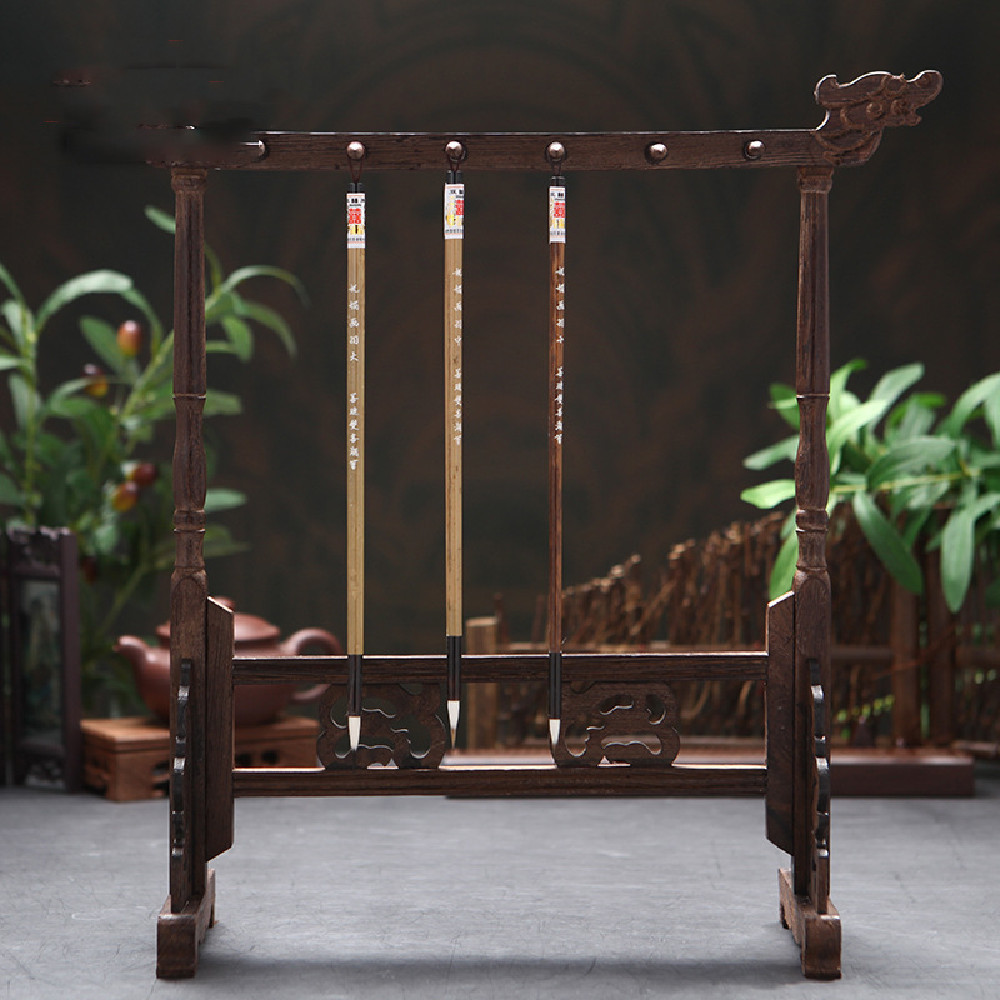
No — a pencil works on day one. But a brush changes the speed of the hand in a way a pen cannot: it has no ballpoint patience, it asks you to load, drag, lift, and breathe between strokes. For ink without the mess, a water-writing cloth is the middle path — you write with water, the marks appear like ink and fade within minutes, and the page is always blank for tomorrow. Keep a proper writing brush for the nights the fading feels like loss; some evenings want to leave a mark.
Why does slow handwriting calm you down?
Because it borrows the body’s slowest instruments — the wrist, the breath, the eyes tracking a line — and typing uses none of them. Ten lines by hand take about as long as two paragraphs typed, and the difference is the point: the task is slow enough that hurry has nowhere to sit. Calligraphers call it lifting the hand out of hurry. Psychologists would call it a motor reset. The word does not matter; the tempo does.
Questions before the first ten lines
My handwriting is terrible. Does it matter?
Less than you fear. On water cloth it fades in minutes — nothing to judge, nothing to keep. On paper, write for the hand’s sake, not the page’s. Legibility was never the assignment.
Same prompts every night?
Rotate them. The list above carries about a month of evenings before the answers start repeating — and when they do, the repetition itself is worth a line.
Writing is not class — it leads the hand out of hurry.
Keep the kit on the desk, not in a box labeled “someday.” Visibility is half the practice.